
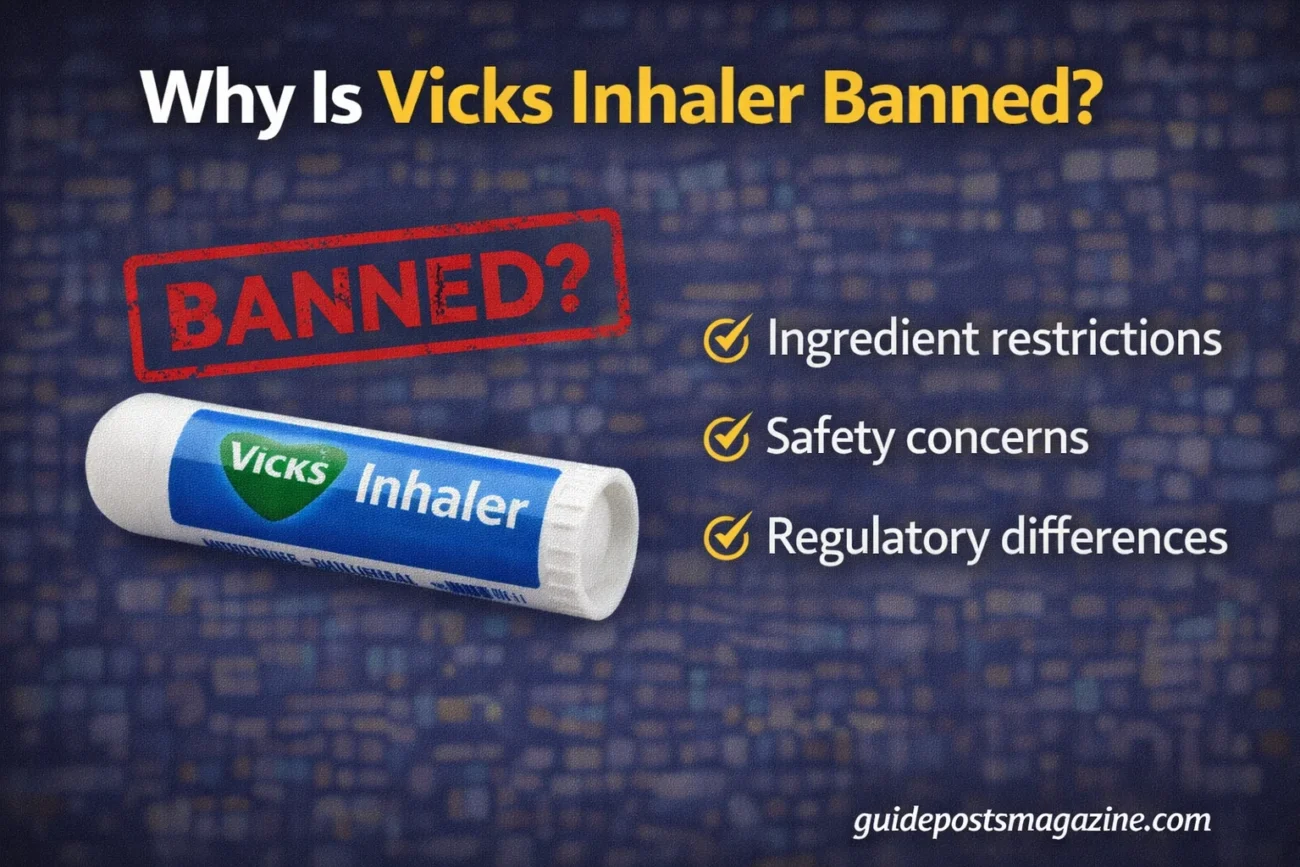
Many people have heard claims or rumors online suggesting that Vicks inhalers are banned. This has led to widespread curiosity and confusion, with users searching why is vicks inhaler banned to understand whether the product is illegal or unsafe.
In reality, the situation is more nuanced. Availability and regulations can vary by country, and restrictions often relate to ingredient policies rather than the product itself being universally banned. This guide explains the facts, regulatory context, and safety considerations so you can better understand the issue.
Is Vicks Inhaler Actually Banned
The first step in answering why is vicks inhaler banned is clarifying whether the product is truly banned everywhere.
Not universally banned
Vicks inhalers are still available in many regions as over the counter products. They are commonly sold in pharmacies and retail stores in several countries.
Restrictions in certain markets
In some places, regulatory policies may limit availability due to ingredient regulations or labeling requirements. This can create the impression that the product is banned even when it is simply restricted or reformulated.
Understanding What a Vicks Inhaler Is
Knowing what the product contains helps explain the regulatory attention it sometimes receives.
Purpose of the inhaler
Vicks inhalers are nasal devices designed to provide a sensation of clearer breathing. They typically contain aromatic compounds that create a cooling effect.
How it works
The inhaler releases vapors that stimulate nasal passages, giving a temporary feeling of relief from congestion. It does not treat underlying conditions but provides comfort for minor symptoms.
Why Is Vicks Inhaler Banned in Some Discussions
The keyword why is vicks inhaler banned often trends due to misunderstandings about ingredient regulations and product labeling.
Ingredient policy differences
Countries regulate over the counter products differently. Some ingredients allowed in one region may face stricter oversight in another.
Misinterpretation of recalls or changes
When a product is reformulated or temporarily unavailable, it can lead to assumptions that it has been banned.
Online misinformation
Rumors spread quickly online, sometimes exaggerating regulatory changes and creating confusion among consumers.
Ingredient Safety and Regulatory Focus
Regulatory bodies evaluate products to ensure consumer safety.
Common active components
Vicks inhalers often contain compounds such as menthol or similar aromatic ingredients that provide a cooling sensation.
Safety evaluations
These ingredients are generally considered safe when used as directed, but regulatory agencies may review them periodically to confirm compliance with updated standards.
Labeling requirements
Some restrictions relate to packaging and instructions rather than the product itself. Clear labeling helps consumers understand proper use.
Country Specific Availability
Availability differs depending on local regulations and product approvals.
Regions where it is widely available
In many markets, the inhaler remains a common over the counter product sold for temporary nasal comfort.
Regions with restrictions
Some countries may limit certain formulations due to ingredient guidelines or require reformulated versions that meet local standards.
Impact of regulatory updates
Changes in health regulations can affect how products are marketed or distributed, which may lead to temporary unavailability.
Health Concerns Often Mentioned
Questions about why is vicks inhaler banned sometimes stem from safety concerns.
Overuse considerations
Using any nasal product excessively may lead to irritation. Following instructions helps minimize potential issues.
Sensitivity reactions
Some individuals may experience mild irritation or sensitivity to aromatic ingredients. This varies from person to person.
Not intended for certain groups
Like many products, inhalers may have age or usage guidelines to ensure safe use.
Myths Versus Facts
Separating facts from misconceptions helps clarify the situation.
Myth it is banned everywhere
Fact the product is still sold in many regions and remains widely used.
Myth it is unsafe
Fact when used as directed, it is generally considered safe for temporary relief.
Myth restrictions mean prohibition
Fact regulatory differences often involve labeling or formulation adjustments rather than complete bans.
Why Regulations Change Over Time
Health authorities periodically update guidelines to reflect new research and safety standards.
Evolving safety research
As more data becomes available, regulators may adjust policies to ensure consumer protection.
Consumer protection measures
Changes are often implemented to improve transparency and ensure safe usage.
Industry compliance
Manufacturers may reformulate products to meet updated requirements, which can affect availability.
Alternatives to Consider
If a product is unavailable in your area, there are other options.
Saline nasal sprays
These products provide moisture and comfort without active decongestant ingredients.
Steam inhalation
Warm steam may help provide temporary comfort for nasal passages.
Other over the counter products
Pharmacies often offer alternative inhalers or nasal solutions that serve similar purposes.
Tips for Safe Use
Following best practices ensures a positive experience.
Use as directed
Always follow instructions on the packaging to avoid overuse.
Avoid sharing inhalers
Personal devices should not be shared to maintain hygiene.
Store properly
Keeping the inhaler in a clean and dry place helps maintain quality.
Why People Keep Searching Why Is Vicks Inhaler Banned
Public interest in health products often increases when rumors circulate.
Concern for safety
Consumers want reassurance about products they use.
Curiosity about regulations
Changes in availability lead people to seek explanations.
Influence of online discussions
Social media can amplify questions even when there is no widespread ban.
The Role of Regulatory Agencies
Health authorities ensure that products meet safety and quality standards.
Monitoring product safety
Agencies review data and consumer reports to maintain oversight.
Updating guidelines
Regulations may change as new information emerges.
Supporting informed choices
Clear labeling and guidance help consumers use products responsibly.
Key Takeaways
Understanding why is vicks inhaler banned requires recognizing that the product is not universally banned. Differences in regulations, ingredient policies, and labeling requirements often explain variations in availability.
By focusing on accurate information and following usage instructions, consumers can make informed decisions about nasal inhaler products.
Conclusion
The question why is vicks inhaler banned highlights how quickly misconceptions can spread when regulatory changes occur. While restrictions or reformulations may exist in certain regions, the product remains widely available in many markets.
Most concerns relate to regulatory standards rather than safety issues. As with any over the counter product, using it as directed and consulting a healthcare professional when needed ensures the best experience.
Understanding the facts helps separate myths from reality and allows consumers to make confident, informed choices.